
Building Hope: A Letter from our Chief Editor Construyendo esperanza: Una carta de nuestro editor.
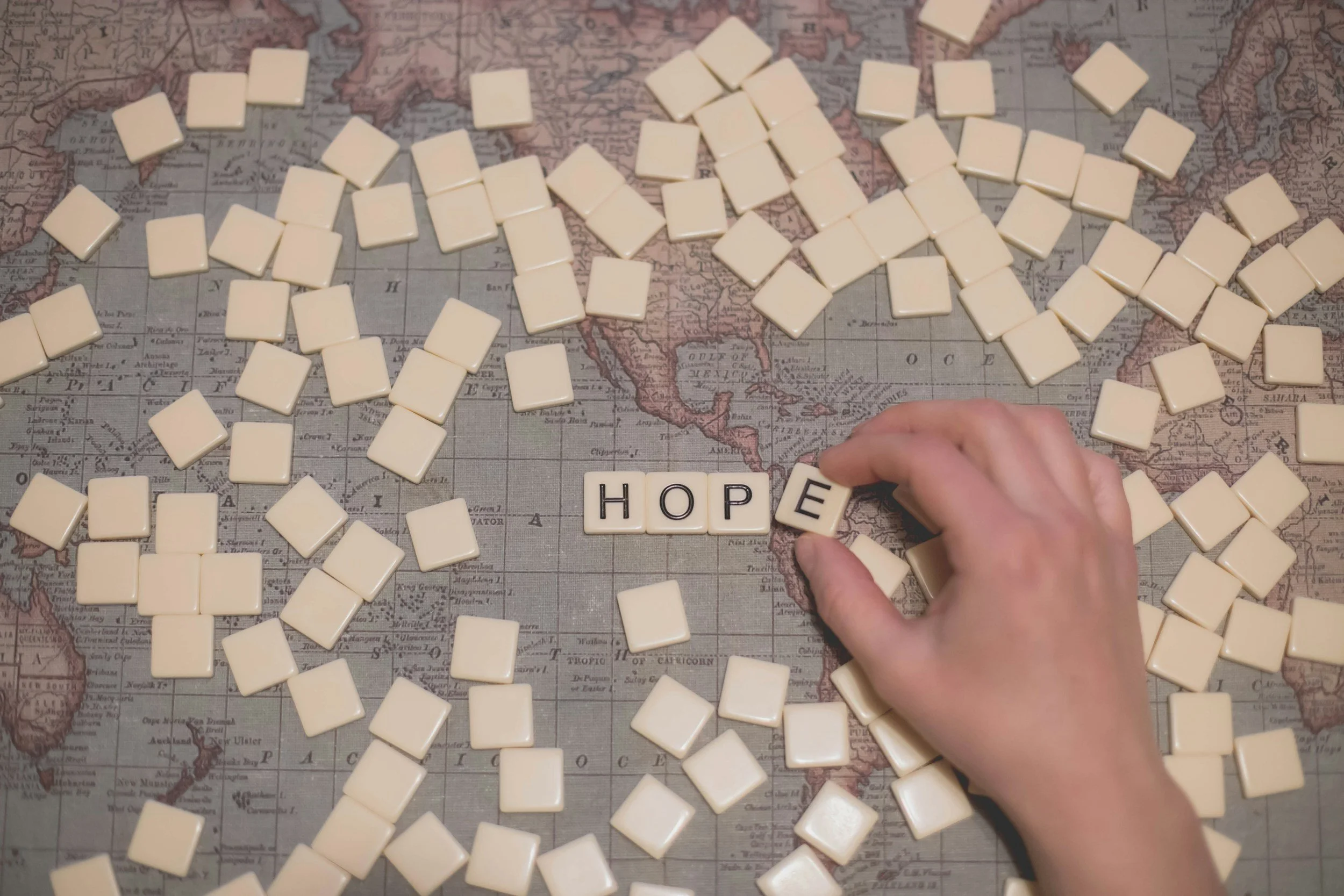
What is hope?
It is a presentiment that imagination
is more real and reality less real than it looks.
It is a hunch that the overwhelming brutality
of facts that oppress and repress us
is not the last word.
It is a suspicion that reality is more complex
than realism wants us to believe.
That the frontiers of the possible are not
determined by the limits of the actual;
and that in a miraculous and unexpected way
life is preparing the creative events
which will open the way to freedom and resurrection - but the two, suffering and hope
must live from each other.
Suffering without hope produces resentment and despair.
But, hope without suffering creates illusions, naivete, and drunkenness.
Let us plant dates,
even though we who plant them will never eat them.
We must live by the love of what we will never see.
This is the secret discipline.
It is a refusal to let our creative act
be dissolved away by our need for immediate sense experience and it is a struggled commitment to the future of our grandchildren.
Such disciplined love is what has given prophets and revolutionaries, and saints, the courage to die for the future they envisaged.
They make their own bodies the seed of their highest hope.
-Rubem Alves in Tomorrow’s Child: Imagination, Creativity and the Rebirth of Culture.
Hope is tricky. On January 20, as many of us sat in front of the television and realized what was unfolding, it was difficult to find spaces of hope—seeds of hope, even a small grain of hope that could tell us that something good still remained. For those of us watching from the outside, who may not suffer the direct blows of this U.S. administration, it was also very difficult to find hope for our own countries and friends. It felt as though we were hoping for hope. That moment forced us to ask not only where hope could be found, but also what kind of hope we were actually searching for. Because hope can be manipulative. Some preach hope as if the future automatically holds something better. Hope often detaches itself from daily struggles, which in many cases are justified because “in the end, we will be rewarded.” Or perhaps simply because we hold on to the hope that heaven, the future, eschatology, or the end of the world will somehow be hopeful.
It is precisely this kind of detached and deferred hope that Advent interrupts. Advent is a hopeful journey that, at times, seems impossible. The king seeks to kill the baby. There is no place for Mary to give birth. The world conspires so that the divine promise will not become tangible reality. Everything seems organized against the very possibility of birth. A young woman walks with her spouse in the final month of her pregnancy, carrying a promise of light in her womb. Everything around them says there is no way forward. Hope is tricky.
Reading the Advent story this way invites us to reconsider what the birth of Jesus actually reveals about hope. The season of reflection on the birth of the central figure of the Christian faith does not necessarily represent a simplistic or easy path toward the miracle of life. His birth already carries the marks of struggle, resistance, and confrontation with power. If Jesus is the memory of divine grace made flesh, if he truly represents an alternative way of healing a broken world, if his arrival embodies divine redemption and the beginning of an alternate reality, his coming does not make that evident. The road to his birth mirrors his road to Golgotha. It represents a profound struggle against imperial pressures, a body that claims a different and dignified life. It is a plural and diverse effort that subverts oppressive colonial possibilities in order to claim hope for life here and now. It is not a future-oriented fantasy that refuses to take tangible and present human suffering as the central task of the Kingdom. Rather, it is a fully incarnated presence that, in its divine and human journey, takes on all the pains and struggles of humanity to demonstrate that hope is built.
Building hope in the midst of our current world feels almost like an extreme sport. Everything around us pushes toward despair—toward looking down and surrendering before the ultimate powers that claim capitalism, gender-based violence, racism, and colonialism as fundamental values of human life. The world is submerged in a wave of discrimination that classifies human beings into hierarchical structures and conditions their worth according to harmful and abject ideas of what it means to live with dignity. Those who occupy positions of power organize a reality in which oppressed people have no voice or agency; we exist at their mercy. The reality we are told to accept is that we are destined to serve and perpetuate their needs, to perish, to suffer endlessly. In this reality hope is impossible.
But, “what is hope if not understanding that reality, though material and operational, does not determine everything that is possible?” asks Dr. Yara González-Justiniano. What is hope if not a continuous journey that rejects the present world and affirms, without hesitation, that another reality—more ethical, more just, more beautiful, and more full of love—is possible? What is hope if not the unshakable conviction that our imagination can exceed imposed social paradigms and allow us to think and act toward the world that Jesus Christ dreamed? Jesus, the little child who comes to life in Advent, is hope made real. He is the tangible proof of human possibility. He is looking straight at a world that racializes, colonizes, and oppresses us, and telling it that love and grace prevail. That the values of the Kingdom do not bend before misogynistic policies nor collapse under ICE raids. Hope is the continuous struggle against imperial powers. It is grounded in the deep belief that we can make love, grace, peace, and justice prevail in this world; here and now.
Baptist Peacemaker affirms this hope. It builds it daily through its stories, sermons, and interviews. It is our space within BPFNA—Baptists for Peace—that claims an alternate world and declares that racism, classism, and violence will not triumph over love, justice, and peace. We did this work this year, and we will do it again next year. Our journal will continue to proclaim peace in a world of war, love in a world of violence, and justice in a world of oppression. The rainbow of possibilities found in divine grace, and the journey toward Advent and the Cross, will always be our map. And we will continue to build hope with our words and our actions.
The new year brings new goals and new stories. We will reflect on how to extend the struggle for peace and justice from our sanctuaries. We will explore how our liturgies can transgress oppressive church structures that perpetuate power and violence. We will seek ways of preaching that denounce racial and ethnic prejudice while striving to embody the values of the Kingdom of God. The powers of this world that announce abuse and oppression will not prevail. And we will be voices that help build a hope capable of imagining an alternate and just world for all people. So help us God.
Thank you for walking with us this year.
We know it was difficult, but we have each other.
We build hope. We preach peace.
Stay tuned for next year. We will build more hope—together.
Happy Holidays!
Rubén David
Chief Editor, Baptist Peacemaker
———————————————————————————————————————————————————————————————————————————--
¿Qué es la esperanza?
Es un presentimiento de que la imaginación
es más real y la realidad menos real de lo que parece.
Es una corazonada de que la abrumadora brutalidad
de los hechos que nos oprimen y reprimen
no es la última palabra.
Es la sospecha de que la realidad es más compleja
de lo que el realismo quiere hacernos creer.
Que las fronteras de lo posible no están
determinadas por los límites de lo actual;
y que, de manera milagrosa e inesperada,
la vida está preparando los acontecimientos creativos
que abrirán el camino hacia la libertad y la resurrección;
pero ambos, el sufrimiento y la esperanza,
deben vivir el uno del otro.
El sufrimiento sin esperanza produce resentimiento y desesperación.
Pero la esperanza sin sufrimiento crea ilusiones, ingenuidad y embriaguez.
Plantemos dátiles,
aunque quienes los plantamos nunca los comamos.
Debemos vivir del amor por aquello que nunca veremos.
Esta es la disciplina secreta.
Es una negativa a permitir que nuestro acto creativo
se disuelva por nuestra necesidad de una experiencia inmediata de sentido,
y es un compromiso luchado con el futuro de nuestros nietos.
Este amor disciplinado es lo que ha dado a profetas, revolucionarios y santos
el valor para morir por el futuro que vislumbraron.
Ellos hacen de sus propios cuerpos la semilla de su más alta esperanza.
—Rubem Alves, en Tomorrow’s Child: Imagination, Creativity and the Rebirth of Culture.
La esperanza es complicada. El 20 de enero, mientras muchas y muchos de nosotros estábamos sentados frente al televisor y nos dábamos cuenta de lo que estaba ocurriendo, fue difícil encontrar espacios de esperanza: semillas de esperanza, siquiera un pequeño grano de esperanza que pudiera decirnos que todavía quedaba algo bueno. Para quienes observábamos desde fuera, que quizá no sufrimos directamente los embates de esta administración de Estados Unidos, también fue muy difícil encontrar esperanza para nuestros propios países y amistades. Se sentía como si estuviéramos esperando tener esperanza. Ese momento nos obligó a preguntarnos no solo dónde podía encontrarse la esperanza, sino también qué tipo de esperanza estábamos buscando en realidad. Porque la esperanza puede ser manipuladora. Algunas personas predican la esperanza como si el futuro contuviera automáticamente algo mejor. Con frecuencia, la esperanza se desvincula de las luchas cotidianas, que en muchos casos se justifican porque “al final, seremos recompensados”. O quizá simplemente porque nos aferramos a la esperanza de que el cielo, el futuro, la escatología o el fin del mundo será de algún modo esperanzador.
Es precisamente este tipo de esperanza distanciada y postergada la que el Adviento interrumpe. El Adviento es un caminar esperanzado que, en ocasiones, parece imposible. El rey busca matar al bebé. No hay lugar para que María dé a luz. El mundo conspira para que la promesa divina no se convierta en realidad tangible. Todo parece organizado en contra de la misma posibilidad del nacimiento. Una joven camina con su esposo en el último mes de su embarazo, llevando en su vientre una promesa de luz. Todo a su alrededor dice que no hay salida. La esperanza es complicada.
Leer la historia del Adviento de esta manera nos invita a reconsiderar qué revela realmente el nacimiento de Jesús sobre la esperanza. La temporada de reflexión sobre el nacimiento de la figura central de la fe cristiana no representa necesariamente un camino sencillo o fácil hacia el milagro de la vida. Su nacimiento ya lleva las marcas de la lucha, la resistencia y la confrontación con el poder. Si Jesús es la memoria de la gracia divina hecha carne, si verdaderamente representa una forma alternativa de sanar un mundo roto, si su llegada encarna la redención divina y el comienzo de una realidad alterna, su venida no hace que eso sea evidente. El camino hacia su nacimiento refleja su camino hacia el Gólgota. Representa una lucha profunda contra las presiones imperiales, un cuerpo que reclama una vida distinta y digna. Es un esfuerzo plural y diverso que subvierte posibilidades coloniales opresivas para reclamar esperanza para la vida aquí y ahora. No es una fantasía orientada al futuro que se niega a tomar el sufrimiento humano tangible y presente como la tarea central del Reino. Más bien, es una presencia plenamente encarnada que, en su recorrido divino y humano, asume todos los dolores y luchas de la humanidad para demostrar que la esperanza se construye.
Construir esperanza en medio de nuestro mundo actual se siente casi como un deporte extremo. Todo a nuestro alrededor empuja hacia la desesperación, hacia bajar la mirada y rendirse ante los poderes últimos que proclaman el capitalismo, la violencia de género, el racismo y el colonialismo como valores fundamentales de la vida humana. El mundo está sumergido en una ola de discriminación que clasifica a los seres humanos en estructuras jerárquicas y condiciona su valor según ideas dañinas y abyectas de lo que significa vivir con dignidad. Quienes ocupan posiciones de poder organizan una realidad en la que las personas oprimidas no tienen voz ni agencia; existimos a su merced. La realidad que se nos dice que aceptemos es que estamos destinados a servir y perpetuar sus necesidades, a perecer, a sufrir sin fin. En esta realidad, la esperanza es imposible.
Pero, “¿qué es la esperanza si no entender que la realidad, aunque material y operativa, no determina todo lo que es posible?”, pregunta la Dra. Yara González-Justiniano. ¿Qué es la esperanza sino un caminar continuo que rechaza el mundo presente y afirma, sin vacilación, que otra realidad —más ética, más justa, más bella y más llena de amor— es posible? ¿Qué es la esperanza sino la convicción inquebrantable de que nuestra imaginación puede exceder los paradigmas sociales impuestos y permitirnos pensar y actuar hacia el mundo que Jesucristo soñó? Jesús, el pequeño niño que cobra vida en el Adviento, es la esperanza hecha realidad. Es la prueba tangible de la posibilidad humana. Mira de frente a un mundo que nos racializa, coloniza y oprime, y le dice que el amor y la gracia prevalecen. Que los valores del Reino no se doblan ante políticas misóginas ni colapsan bajo las redadas de ICE. La esperanza es la lucha continua contra los poderes imperiales. Está arraigada en la profunda convicción de que podemos hacer prevalecer el amor, la gracia, la paz y la justicia en este mundo; aquí y ahora.
Baptist Peacemaker afirma esta esperanza. La construye cada día a través de sus historias, sermones y entrevistas. Es nuestro espacio dentro de BPFNA—Baptists for Peace—que reclama un mundo alterno y declara que el racismo, el clasismo y la violencia no triunfarán sobre el amor, la justicia y la paz. Hicimos este trabajo este año, y lo haremos nuevamente el próximo. Nuestra revista continuará proclamando paz en un mundo de guerra, amor en un mundo de violencia y justicia en un mundo de opresión. El arcoíris de posibilidades que se encuentra en la gracia divina, y el camino hacia el Adviento y la Cruz, siempre será nuestro mapa. Y continuaremos construyendo esperanza con nuestras palabras y nuestras acciones.
El nuevo año trae nuevas metas y nuevas historias. Reflexionaremos sobre cómo extender la lucha por la paz y la justicia desde nuestros santuarios. Exploraremos cómo nuestras liturgias pueden transgredir estructuras eclesiales opresivas que perpetúan el poder y la violencia. Buscaremos formas de predicar que denuncien el prejuicio racial y étnico, mientras procuramos encarnar los valores del Reino de Dios. Los poderes de este mundo que anuncian abuso y opresión no prevalecerán. Y seremos voces que ayuden a construir una esperanza capaz de imaginar un mundo alterno y justo para todas las personas. Así nos ayude Dios.
Gracias por caminar con nosotras y nosotros este año.
Sabemos que fue difícil, pero nos tenemos.
Construimos esperanza. Predicamos paz.
Manténganse atentos al próximo año. Construiremos más esperanza—juntos.
¡Felices fiestas!
Rubén David
Editor en Jefe, Baptist Peacemaker