Editor’s note: The following is Rubén David’s closing sermon at Peace Camp. We reproduce it here unedited. Para la versión en español presione aquí.
It Scratches Where There’s No Itch
Revelation 21:1-4
I would like to begin my message tonight by expanding on a story by the Latin American writer Eduardo Galeano. In his short piece “La función del arte/2,” Galeano tells of a missionary pastor, Miguel Brun, who decided, together with his congregation, to make a missionary journey to a community of Indigenous natives in Latin America. Brun, a pastor of real depth, a master of language, learned in history and theology, and a profound student of philosophy, was eager to share the divine message with them. His attitude was not colonizing but kind and gentle. His aim was not conversion, but the presentation of the Gospel as an “alternative” possibility.
Brun went deep into the Amazon and came upon a community of people. In this community the chief was known for his vast wisdom. His way of governing was noble and just. The people were happy and active, prosperous and generative. Brun arrived with the best of intentions, and the chief welcomed him with open arms. They sat together on the ground and began to talk, about life, the world, love, nature. Brun took the moment to speak of the Christian God. He quoted beautiful passages of Scripture, powerful texts of inclusion and openness. He spoke of the possibility of redemption, of the love of Jesus, of his particular way and his vision for the world. The chief listened attentively to Brun’s words as he, with honest emotion, spoke of this saving Gospel full of love.
When Brun finished speaking, there was silence. The chief, known for his vast wisdom and depth of thought, sat for a while reflecting on the missionary’s words. With eyes full of love and tenderness, the chief looked Brun in the eye and said: “What you have just told me scratches. It scratches a great deal, and it scratches very well. But it scratches where there is no itch.”
This year’s theme for Baptist Peace Fellowship is Reimagining Solidarity, grounded in a text from Revelation about “a new heaven and a new earth.” Tonight I would like to take an in-depth look at this idea of what it means to reimagine.
An Introduction to Latin American Liberation Theology
Before I delve into the crux of the matter, let me situate the message. Toward the end of the 1960s, what we now know as Latin American Liberation Theology began to take concrete shape. The wars, the abuses, and the political turmoil of Latin America gave rise to a new current of thought that began to articulate ideas about the Sacred that responded to their own local context. To put it plainly: thinkers across Latin America began to realize that the European theology known until then through the writings of symbolic figures like Karl Barth, Dietrich Bonhoeffer, and Paul Tillich, among others, could not respond to the contextual particularities or the specific struggles of their peoples.
Ivone Gebara has said that theology carries a personal baggage, that every theological statement we utter bears and reflects the particular mark of our lived experience, so that it is impossible to separate our understanding of the Sacred from our daily lives. This idea is fundamental to what we now call Latin American Liberation Theology. In Latin America, the experiences of oppressed peoples began to germinate and take on flesh, bone, and meaning, forming a philosophical-theological current that re-thought the possibilities of the divine from their experiences of pain, anguish, and oppression, in the hope of a “new” world.
Same Things, Different Way
One of the pioneers of Latin American liberation theology, the Brazilian theologian Rubem Alves, declared flatly that colonialism was one of the fundamental foundations of the oppression suffered by the peoples of Latin America. For Alves, colonialism was not confined to political processes in Latin America; colonialism was a web. Alves understood colonialism as a greater power, a deep ideological structure of thought that organized the world in a way that oppressed some peoples while benefiting others. Alves argued that colonialism wrote a history, a history in which colonized people had no agency, were not active participants, but were reduced to spectators of a world that colonialism seized from them for the benefit of the powerful.
According to Alves, colonialism also works to organize a final, settled thought about God. That is: everything that could be said about God had already been said by European theologies. In this sense, it was not possible to articulate a new vision of God within colonialism, because the story of who and what God was, in colonial logic, obeyed the oppressive powers that diminished and devalued some people at the expense of others.
Something distinctive about Alves is that in his work he began to notice that the responses to colonialism, the mechanisms of “inclusion,” the ways in which people in power created and developed healthier spaces, were nothing more than repetitions of colonial logics and patterns disguised as liberation. Put another way: people repeated the same things in a more effective, more inclusive, more loving way, yet they remained bound to the very same colonial logic.
Let us think of it as a metaphor. Alves argued that the world operated like a giant castle. People lived in the rooms of the castle. Every so often someone would discover a new room, with new furniture, different coordinates, unique spaces found in no other room. They would celebrate this new space as inclusive, liberal, different, open, prosperous, a space of “resistance.” And so: “Fascinated by the innumerable rooms in the castle, who will be able to see that we are locked inside?” What Alves proposed in 1972, and it still holds deep relevance today, is that many decolonizing struggles centered on searching for a new room within the castle. In doing so, new mechanisms, new ways, new spaces were discovered but were unable to exit the castle.
I say that many times we too go on finding new rooms within the castle. We celebrate the new furniture, the new spaces; the new heavens and the new earths. We become enchanted by freedom, by decolonization, by a hopeful future. But we are trapped inside the castle.
“In Latin America, the experiences of oppressed peoples began to germinate and take on flesh, bone, and meaning, forming a philosophical-theological current that re-thought the possibilities of the divine from their experiences of pain, anguish, and oppression, in the hope of a “new” world.”
New World, Old Mechanisms
When Christopher Columbus invaded Abya Yala, the land we now call America, from Alaska to La Patagonia, he brought with him an entire structure of the world and a particular, specific way of thinking through which Spain, and later Western Europe, organized the world. Colonialism was not simply a process of conquest, destruction, and appropriation of lands. It simultaneously introduced an entire ideological apparatus that permeates to this day, giving meaning and validity to the normative ways through which we understand the world today. The rational, the logical, the correct, the possible: these are articulated largely, though not everywhere, from a colonial normative logic. What I mean is that the dominant ways through which we understand the world today can be traced back to the invasion of America at the end of the fifteenth century.
The Peruvian sociologist Aníbal Quijano studied this kind of relationship, naming and organizing it under what he called the “colonial pattern of power.” The colonial pattern of power is an epistemological-ideological web that permeates, inserts itself, and works its way into every aspect of our daily lives, affecting, organizing, and giving meaning to the “correct” way of perceiving the world. This pattern has many elements. Take for example the idea of beauty: one kind of woman, one kind of man, is more beautiful than others. In Puerto Rico, for example, people still say “she’s a pretty little Black girl” (una negrita linda), thus suggesting, consciously or not, that Blackness is inherently ugly. And so she is not a beautiful woman, but a pretty little Black girl. It shows up in understandings of labor, progress and development. For example, we celebrate as development, or as a successful person, someone who holds many jobs, who works a great deal. Look how much they’ve accomplished; how successful they are. An unquestionably high value is assigned to work without taking into account the significant amount of time the person is away from their family, their friends, their everyday lives. Work is more valued than these other things. Gender relations are organized out of this pattern, granting to men who are white, free, heterosexual, and European/Anglo-North American the highest position in the hierarchy of people, and reducing everyone who does not meet all of those criteria to a lower level. The world is viewed and organized through a capitalistic mindset; Christian theology is understood as the true religion; art exists from the Renaissance onward, the museums of Europe, the great temples, and so on.
What I want to emphasize is that the colonial pattern of power is a logic. It is not a tangible thing you can touch, but an interactive mechanism, invisible and present, that, consciously or unconsciously, tells us how the world is supposed to be. That logic operates in each and every one of us. Therefore it is also important to understand that if the colonial pattern of power is a web, decolonial efforts are not isolated or disconnected from one another. Rather, the colonial pattern of power is made up of a series of interconnected elements that cannot be separated from one another. And so we must consider the elements of race, gender, the indigenous, nature, capitalism, gender violence, violence against nature, the abuse of natural resources, conceptions of beauty and art, and the hierarchy of knowledge, and so on, as interrelated with one another. To put it plainly: you cannot speak of our relationship with the land without speaking of gender violence; you cannot speak of gender violence without speaking of capitalism; you cannot speak of capitalism without speaking of race. And so on, and so on.
Alves’s castle represents the colonial pattern of power. Its walls symbolize how even some liberation movements that seek to provide “new heavens and new earths,” end up replicating what Gloria Anzaldúa called “the essence of colonization: rip off a culture and regurgitate its white version to the natives.”
I take the time to explain the castle, the colonial pattern of power, and some theological insights because my intention is to invite us to imagine: to exit the castle in search of another possibility, an alternative space that promotes and provides ways of being in the world de-linked from this colonial logic. Thus, tonight my invitation is not to change rooms within the castle Alves spoke of, searching for a “new” philosophy, a “new” mechanism, or a “new” possibility. It is to exit the castle.
Difficult Conversations
It is important to understand that in our present society, and as peacemakers, there are a many viable mechanisms that do indeed provide spaces of liberation. In fact, all of us here take part in them. We tend to raise our voices for Palestine, for the poor, for abused women, for LGBTTQIA2S people, for indigenous peoples, and so on. We involve ourselves in processes to “understand” better, to be better. This work does not go unnoticed; it is both noble and necessary.
And yet, I would like to name, and reject, a premise I have heard this week in our services and gatherings: that we are living in a moment of unprecedented humanitarian crisis. During the week people have said that the world is on the brink of collapse. We weep, we feel, we make and build spaces of lament before the terrible moment the world is going through; a moment we are calling “historic.” Brothers and sisters, let us not be such colonizers. The world is not going through a moment of crisis now; the world has always been in crisis, and in our context, ever since Columbus invaded these lands in 1492.
Palestine, violence against women, the abuses against those who understand their bodies outside of traditional frames, the blockade of Cuba, the wars and invasions of the United States, Donald Trump, the abuse of indigenous peoples: none of this is new. None of this is a tragedy that has arisen in the last few years. To think that it is points to those who have had the privilege of not suffering these blows in their own lives. To highlight these abuses now as signs that the world is on the brink of collapse, or in an unprecedented crisis, reveals the immense privilege of those for whom the world has only now become a tiny bit uncomfortable, and who cry out demanding peace, without realizing that for people historically oppressed, the world has always been this way. My brothers and sisters, what is happening is not new.
And forgive me for putting my finger on the wound. But if BPFNA intends to reimagine solidarity, then it must also come to terms with the fact that the very people who for centuries have been complicit in, and beneficiaries of, the abuse and oppression of historically devalued communities and peoples cannot now come and tell the world that they are going to fix what they themselves destroyed. Those who have historically enjoyed all the mechanisms of colonization, making room for themselves in the world with little or no resistance, cannot be the ones who now also tell historically devalued and impoverished people how the world is to be repaired. Adopting an indigenous way of thinking, filling non-profit boards with Black people or with people from LGBTTQIA2S communities in order to be inclusive, grasping an alternative philosophy, reading about a specific community, or listening to terrible stories in order to lament: these are noble efforts. Yet these moves also reveal the privilege of some people who have the freedom to choose when, how, and where to be uncomfortable, to feel, to lament, to act. Often without realizing that those whose pain they are being told about, and those they presume to teach with their “new” philosophies, are people who have lived with that pain since the day we were born.
Luz said on Wednesday that another world is possible, and it is possible because it is already here. The problem is that those who destroyed it now want to tell others how to repair it. But you cannot make peace with the very mechanisms that created the world of war in which we live. You cannot decolonize with the same colonial mechanisms that colonized us. You cannot de-racialize with the same racial mechanisms, much less without Black people among us. The other world Luz spoke of is possible, but only from the understanding that it cannot be built by doing the same things in a better way. People come and preach to us of possible futures, without understanding that the future is a privileged vision. The future is imagined only by those who have no doubt where their next meal and paycheck is coming from, who have money saved in banks and can think about retirement, who have stability, a house, a car, a salary, health insurance. The future is a privilege that not all of us can access.
And let me be clear, because I do not want to be misunderstood either. My message does not seek to diminish the valuable efforts of those who are allies of the historically oppressed. What I do want to point out is that the movement toward equity, solidarity, and peace is far more complex. It involves a depth that is often ignored. It requires a pointed acknowledgment of whiteness and privilege, and it also requires a silence, a stepping out of the way, and a yielding of spaces, so that it is the minority voices, the small and silenced ones, who lead the way in reimagining a new heaven and a new earth.
At this juncture it is also important to stress that we, as Latina and Latino people, also participate in and perpetuate the colonial pattern of power. Frequently, from within our own struggles, we focus more on criticizing, devaluing, discrediting, and rejecting movements from the north in the quest for equity and liberation. Sin querer, queriendo, as El Chavo would say, we grant ourselves a superior wisdom, a greater knowledge, a “better” understanding of the world, and in doing so we name ourselves the only ones capable of saving the world. We claim our spaces as the unquestionable pillars of liberation. There are those who reach positions of leadership only to seek the spotlight and place themselves at the center of the discussion, as if they were the absolute possessors of “the truth.” They seem to forget the most basic principle of theology, which stresses that there is no world without community; that the diversity of colors includes white as well. They forget the powerful words of the Mexican theologian Eliseo Pérez, who declared that “Christ died for me, but that ‘for me’ must be understood in the way that I belong to everyone.”
To put it plainly: what these mechanisms I am speaking of do is move people to new rooms within the castle. They create what Alves called an “illusion of freedom.” They change rooms, but they remain trapped inside the castle. But to reimagine solidarity is not to move to another, “better” room within the castle; it is an invitation to leave the castle. Our work has to be deeper, more alternative, more intentional. We cannot keep doing the same things in a better way; we have to do other things, if we truly believe in the possibility of an alternative world. On this, sadly, there is still a long way to walk in order to develop movements that scratch where it actually itches.
“But you cannot make peace with the very mechanisms that created the world of war in which we live. You cannot decolonize with the same colonial mechanisms that colonized us. You cannot de-racialize with the same racial mechanisms, much less without Black people among us. The other world Luz spoke of is possible, but only from the understanding that it cannot be built by doing the same things in a better way.”
Reimagination and Hope
In his talk on Wednesday, Néstor invited us to imagine a Christianity de-linked from colonial ideas, from what Quijano called the colonial pattern of power. BPFNA must take up this question as the foundation for its next moves. Our answer has to be deeper. It needs to reckon with a raw and hard colonial history, and to recognize ourselves as active accomplices of this colonial logic. To imagine this Christianity means beginning to question doctrines and logics we take for granted: the salvation of the soul, the redemption of the individual, the church as the center of gathering, worship as the necessary mechanism for understanding Christ, the relationship between the human and nature as if they were separate entities, the socio-racial dynamics we think are solved with a worship service or by including people of color on our boards, mission trips to devalued communities, or the collection of offerings as the solution to a humanitarian crisis… Reimagining Christianity demands more of us as people and as an organization.
Rubem Alves gives us some clues for reimagining. He suggested leaving the castle in order to think in “illogical” ways, ways that make no sense, that the world calls impossible. It is not about adopting indigenous philosophies to recreate and replicate them in our own spaces, let us remember Anzaldúa’s phrase, but about creating a world where everything we have been told for centuries is impossible becomes possible. Because that is the very foundation of the Holy Gospel: that Christ said, again and again, “You have heard that it was said, but I say to you…” He said it not to integrate his philosophy of the Kingdom into the world he inhabited, but to unmask the world he lived in, and make it perfectly clear that his Kingdom is not of this world. And let it be understood that when I say it is “not of this world,” what I mean is that the Kingdom of God does not obey colonial logics, is not organized around the colonial pattern of power, does not silence marginalized voices, does not invent new categories to “include” other people in the present world. It is not of this world, because it proposes another world. Not a thought, not a philosophy: a world. To reimagine means understanding that the Kingdom cannot exist within the walls of the castle.
This exercise is very difficult. It means questioning our deepest convictions in order to dig out the vestiges of colonialism. We have spent years doing the same thing in better ways, changing rooms in the castle. But now, we need to head to the exit of the castle.
To reimagine is to think the impossible. It is to dream and make possible what the world tells us we will never achieve. It is to give hope a face, feet, hands, a body, skin. It is the Kingdom of God; it is Jesus kneeling before the adulterous woman, writing on the ground that the law does not triumph over grace. It is Jesus with the woman at the well, making clear that discrimination does not triumph over tenderness. It is Jesus with the paralyzed man, saying that sickness does not triumph over health. It is Jesus at the feast of the tax collectors, saying that labels do not define people. It is Jesus embracing and protecting Alexa Negrón Luciano, Serena Angelique Velázquez Ramos, Layla Peláez Sánchez, Penélope Díaz Ramírez, Yampi Méndez, Michellyn, Samuel, Luz María Barreto Bósquez, Alexandra Carrero Vega, Ignacia Santiago Labrador, Emely Anngely Ledesma Vázquez, Alma Torres Nazario, Lourdes Pilar Santiago Reyes, Ana Delia Ocaña Rodríguez, Rosniellys Marcano Carrasquillo, and all the other women and LGBTQIA2S people murdered in Puerto Rico. The Kingdom is Jesus before the tomb of Lazarus, declaring that the world of life triumphs over the world of death. The Kingdom is the irrational silhouette of Jesus walking on the water, affirming, as Dr. Yara González Justiniano profoundly stated, that the visible, tangible, palpable reality does not dictate the limits of the possible.
To reimagine is to understand that the world we live in cannot continue to exist, that its politics are not sustainable, that its mechanisms are not healthy, that its proposals are unworthy. To reimagine arises from the understanding that this world must be brought to an end. To reimagine is to look deeply at our prejudices, our privileges, our failed efforts, our “good intentions” and our struggles, and filter them through the Kingdom of the Jesus who told us, “You have heard that it was said, but now I say to you…” Because it is in that particular turn, from what we have been told the world is, to what we imagine the world could be, that hope arises.
And to reimagine is to build hope. Not to find it in future visions of the world, but to make it real in daily life through concrete actions. Hope is the bread of the mother who can finally eat; the birth of the baby girl after a difficult pregnancy; the tree reborn in the colonized soil; the juice of the fruit that runs down the lips with the first bite. Hope is not only sought; hope is created. Hope is not only longed for; it is made concrete. Hope is not only dreamed; it is lived! Hope is the constant and consistent creation of a world that colonialism tells us is impossible to create. A world that emulates, labors, acts, and turns into daily reality the Kingdom of God’s love, for all people, for all beings, for all that is, and all that exists.
BPFNA needs to make that world real. Our most important task as an organization is to build the Kingdom of God. It is to make the unreal real, the impossible possible, recognizing that silenced voices cannot continue to stay silent. That the voices which for years have enjoyed privilege cannot be the ones to draw us the map for building the alternative world. But understanding, too, that there are no superheroes, there is no magic potion, there is no absolute knowledge. Because the world is built in community. Recognizing together our complicity with colonialism, capitalism, gender violence, racism, abuse, exploitation, indifference, and the destruction of the world. Looking one another in the eye and sharing the wounds we have both caused and suffered, without ranking suffering from a “we are the ones who have suffered most,” but also without flattening it into an “everyone suffers.”
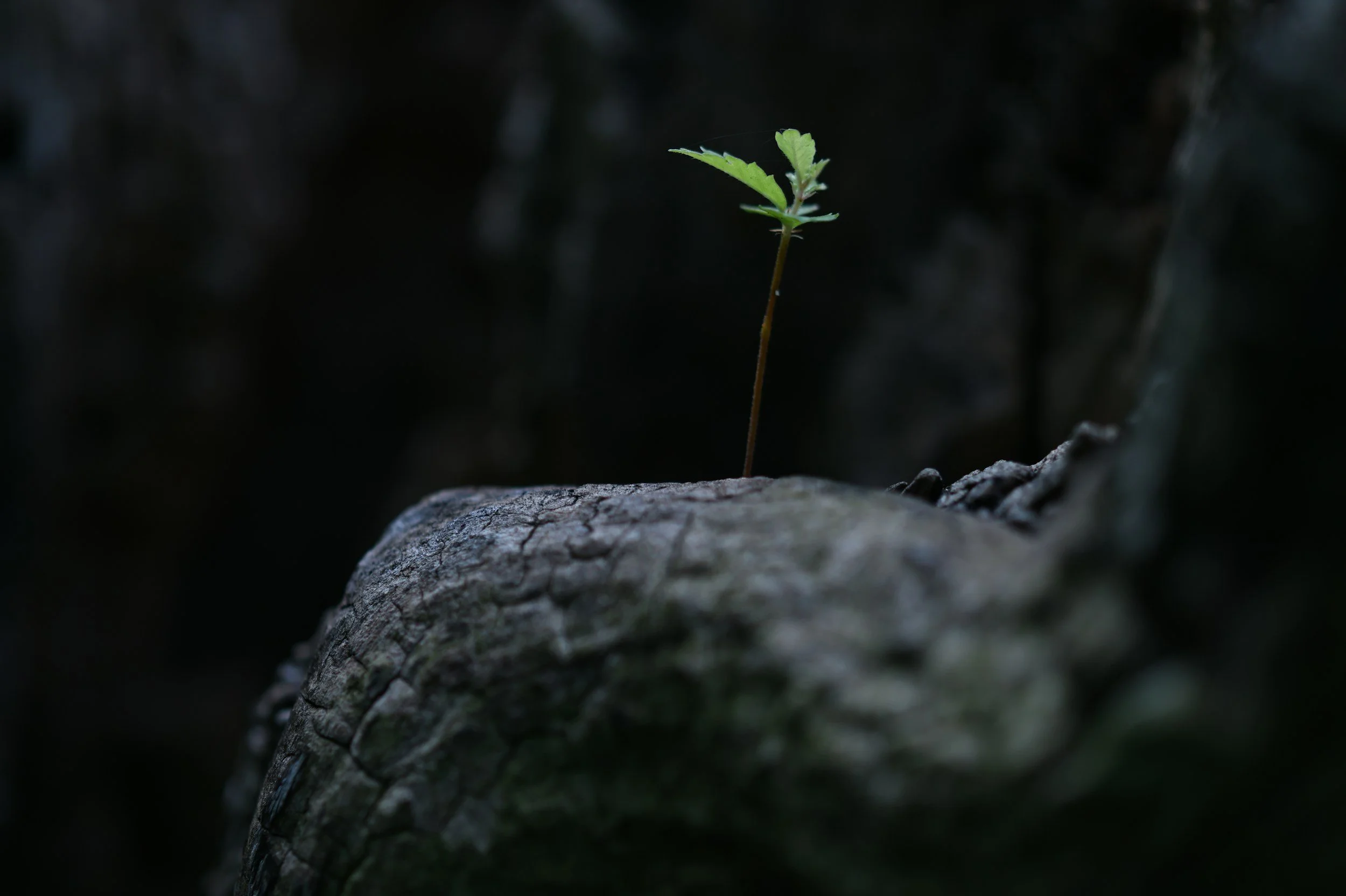
This road is hard, it is demanding. It will confront us. It will open our wounds. It will question us. It will reveal to us that even our greatest efforts at liberation often scratch where there is no itch. But this is the road of hope. The one that makes us new. The road of the flower that is born in the very concrete that destroys it. It is the road that Jesus traced, that our ancestors traced, that the earth traced. And it is the way we move forward as a community of love, to truly build a new heaven and a new earth. So help us God.